

Blog
Relative Energy Deficiency in Sport - The Role of Carbohydrates
There are new findings regarding energy availability. They are relevant to all sports.
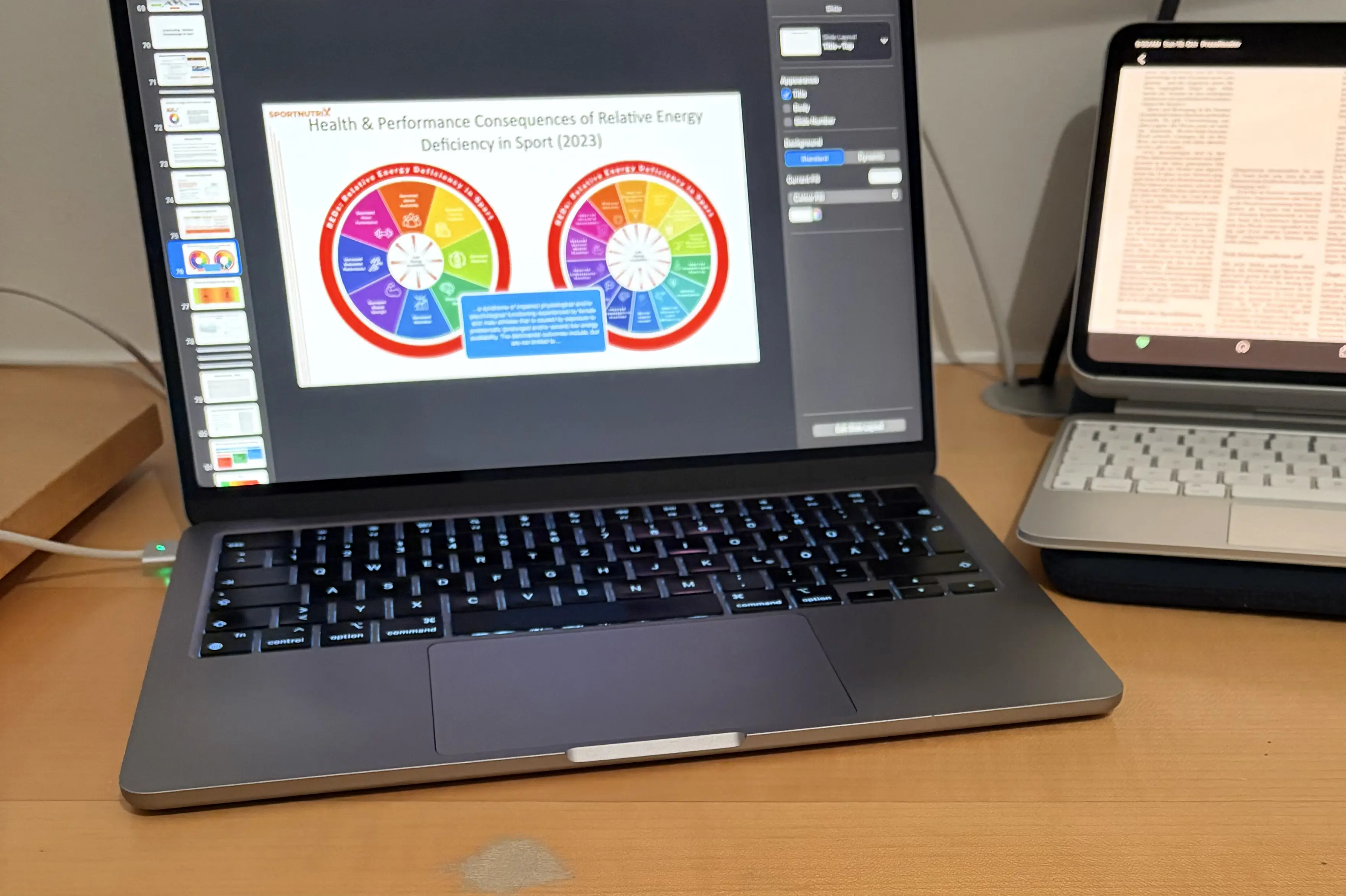
Read nowIn October, I had the opportunity to lead the module on sports nutrition and dietary supplements as part of the sports medicine training program for aspiring sports physicians in Austria. Speaking to 50 participants provided a valuable opportunity to discuss an increasingly important topic in sports medicine: Relative Energy Deficiency in Sport (REDs).
REDs and its symptoms are still not widely enough understood. Every opportunity to discuss this with sports professionals is vital for prevention.
It is a priority for me to constantly find new ways to raise awareness of REDs among physicians. Although the clinical condition is becoming more widely recognized, there are still significant gaps in knowledge. With this in mind, I was pleased to have the opportunity to speak at a sports medicine program, where I could contribute to raising awareness, sharing knowledge, and supporting better clinical practice in the identification and management of REDs.
While nutrition and supplementation are essential aspects of athlete health and performance, a substantial part of the session focused on REDs. REDs can affect athletes across sports and performance levels when energy intake is insufficient to support both the demands of exercise and the body's physiological functions. The consequences extend far beyond athletic performance and can impair numerous aspects of health and general well-being. Recognizing the signs, understanding the underlying mechanisms, and having knowledge of prevention and treatment approaches are therefore essential skills for sports physicians.
A significant part of the event focused on the "IOC REDs Clinical Assessment Tool Version 2" (REDs CAT2), which offers a structured approach to assessing and managing athletes suspected of having REDs. We discussed how this tool can support clinical assessment and decision-making - always emphasizing the importance of considering the individual circumstances of each athlete as well as the overall clinical picture.
To bring these concepts into practice, the course also included case studies illustrating the complexities of REDs assessment and management. These cases highlighted the value of interdisciplinary collaboration and the importance of bringing together different perspectives and areas of expertise when supporting athletes with suspected REDs.
Sports medicine physicians, along with sports dietitians/nutritionists, sports scientists, coaches, physical therapists, and psychologists and other healthcare professionals can each make valuable contributions here. Effective communication and collaboration between these professionals are essential to identify potential issues, develop appropriate management strategies, and support athletes throughout their entire recovery process.
Despite increasing research and growing awareness, knowledge gaps regarding REDs (Relative Energy Deficiency in Sport) persist among medical professionals, as highlighted by Verhoef et al. (2024) and Warrick et al. (2023). This underscores the importance of translating new research findings into clinical practice and ensuring that professionals working with athletes have the necessary knowledge and confidence to recognize REDs and act accordingly.
In Austria, the Diploma in Sports Medicine from the Austrian Medical Chamber (ÖÄK) offers a structured training path for physicians who wish to expand their expertise in the field of sports medicine. The nutrition module provides a valuable opportunity to familiarize physicians—who will later work with athletes in a wide variety of sports and environments - with the topic of REDs.
It is very encouraging that this year's course reached 50 participants. Every opportunity to engage aspiring sports medicine physicians is a chance to raise awareness, correct misconceptions, and promote earlier detection of REDs in clinical practice.
Improved prevention and treatment of REDs requires more than just knowledge of the condition itself. It requires medical professionals who recognize potential warning signs and implement appropriate Diagnostic and assessment methods applies, understands the limitations of individual tools, and through a good collaboration a athlete-centered care ensures. This course was a significant step toward further improving support for athletes.
Mountjoy et al. (2023). 2023 International Olympic Committee's (IOC) consensus statement on Relative Energy Deficiency in Sport (REDs).Br J Sports Med, Sep 57 (17): 1073-1097.doi: 10.1136/bjsports-2023-106994.
Verhoef SJ, Wielink MC, Achterberg EA et al. (2024). Knowledge on relative energy deficiency in sport among physiotherapists and physicians. Eur J Sport Sci. Jan 30;24(1):156–63. https://doi.org/10.1002/ejsc.12026 PMCID: PMC11235195.
Warrick AE, Hassid B, Coleman B, Cansino C, Faustin M (2023). Multidisciplinary physician survey assessing knowledge of the female athlete triad and relative energy deficiency in sport. J Eat Disord. May 9;11(1):70. https://doi.org/10.1186/s40337-023-00800-4. PMID: 37161433; PMCID: PMC10169360.
