

Blog
Everything starts with a good breakfast.
Crunchy Chickpea Granola - a healthy and delicious breakfast.
Read now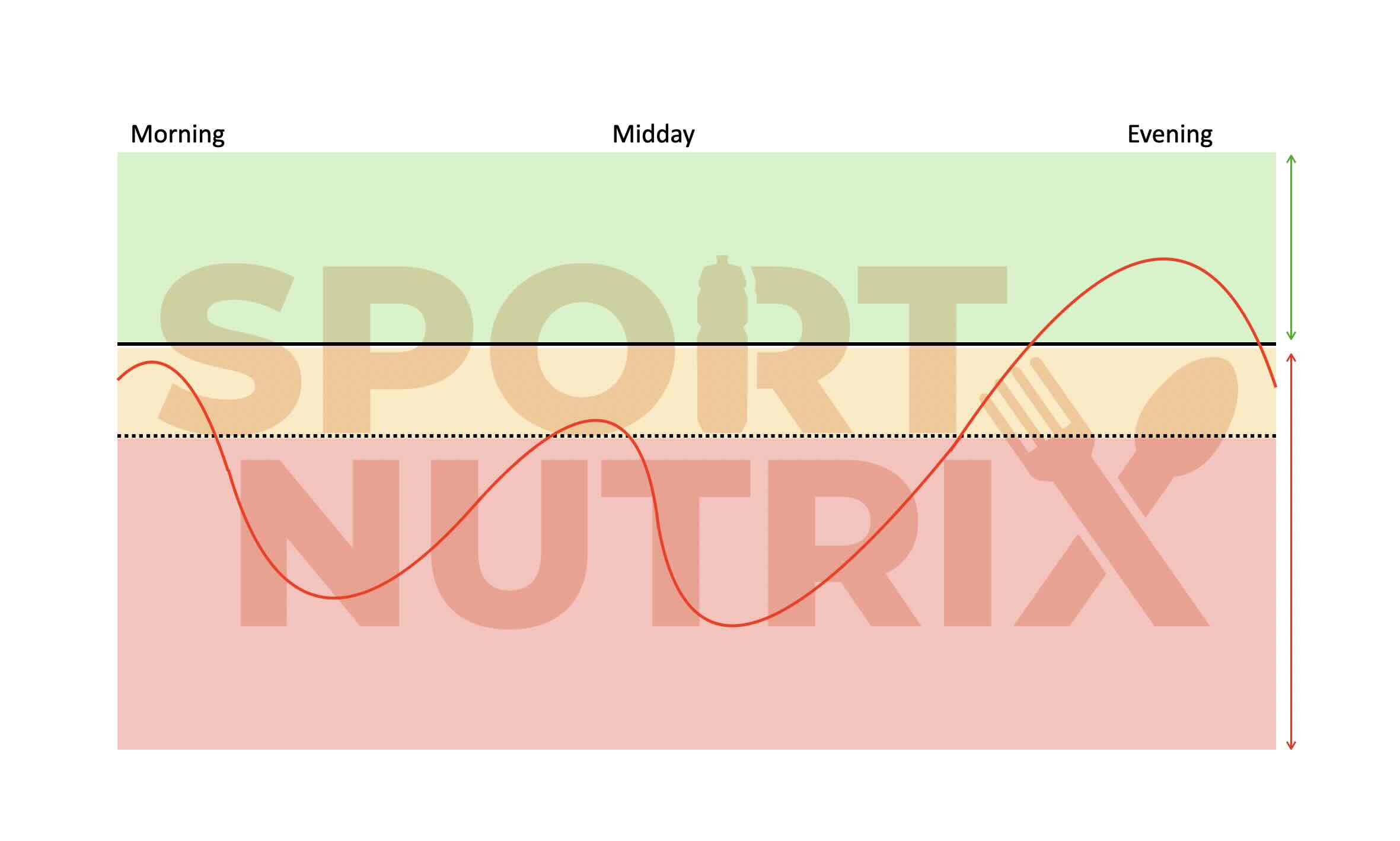

Our daily nutrition serves, among other things, to optimally support our training routine, ensuring that the body not only has enough energy for exercise but also receives all the nutrients and calories it needs to stay healthy and function properly. With adequate fueling during training, it becomes easy for athletes to meet their daily requirements. Carbohydrate drinks, bars and gels, or dates provide the body with energy and help cover caloric expenditure.
In my nutrition work wth athletes, I repeatedly observe that the recommended amounts are not reached. Athletes either don’t take carbohydrates with them to training or consume less than the recommended amounts. Some manage to make up for the gap between recommendations and actual intake after training. They compensate by eating more calories post-exercise. Those who consume too little energy during training and make up for it afterwards may slightly improve their overall energy balance, but for quality training, that’s too late, as this article shows.
For others, however, this compensatory intake of the necessary calories and carbohydrates does not occur. They may fill their recovery time with meals and snacks, but these meals do not provide enough energy to make up for the deficit - an insufficient nutritional adjustment to elevated energy expenditure. A recent scientific article highlighted this problem, too.
Those who consume too little energy during training and then compensate afterward may lose some training quality, but at least they somewhat improve their overall energy balance. Athletes who fail to reach the recommended intake during training and also do not adjust afterward to take in the extra energy remain in a very low energy state. In some cases, intense cravings follow in the evening, and a large number of calories is consumed before going to bed. However, the body has still spent a long period of the day in a suboptimal energy state. This is referred to as the “within-day energy deficit,” meaning the energy deficit occurring within a single day. The longer we remain in a deficit during the day, the greater the effects on our health (e.g., hormones).
No breakfast in combination with too little energy intake during training — that poses a risk!
I don’t know how many times I’ve used the slide below in presentations over the past few years. It is very similar to the figures in some recent scientific publications and illustrates the body’s energy status. Those who eat a small breakfast and consume too little energy during training will run into problems… In many cases, people spend many hours in a state of deficit, which not only reduces performance but also increases the risk of injury and unnecessarily adds stress to the body.
A good start to the day includes a proper breakfast. No matter how well-rested you are, if you skip breakfast, things get difficult. Not everyone finds it easy to eat in the morning. Some athletes simply cannot train without breakfast, others eat a small portion, some manage better with a smoothie, and others prefer to train light (i.e., fasted). If you’re not hungry, it may seem there's no need to eat (many can actually get through training without a large breakfast) but that's a wrong assumption.
What may seem unproblematic, still has consequences in sports. Breakfast alone doesn’t make or ruin a training day, but skipping breakfast does set certain conditions that make the day more challenging. Details are already discussed in another article on breakfast. Skipping breakfast (or having too little food) definitely increases the risk of spending many hours in a deficit state. This becomes even more problematic if, during training, only water or very small amounts of carbohydrates are consumed. This is how a vicious cycle can begin!
Many studies show and agree that insufficient energy intake during training (especially during longer sessions or multiple sessions per day) leads athletes to spend many hours in a deficit state. The risk of prolonged deficit hours is even higher if breakfast is skipped and carbohydrate intake during training is inadequate. This further increases the risk of low energy availability.
What’s missed is usually hard to make up later, and often impossible. Sometimes athletes aren’t even aware of it. The solution? Start your training day with a good breakfast and consume enough carbohydrates during training. Don’t be afraid of carbs. Those who mistime or under-fuel run into a dangerous deficit!
If you’re unsure, reach out to me and we’ll look at your individual needs together.
Burke et al. (2011). Carbohydrates for training and competition. Journal of Sports Sciences, 29 Suppl 1, S17-S27. doi.org/10.1080/02640414.2011.585473.
Fahrenholtz et al. (2018). Within-day energy deficiency and reproductive function in female endurance athletes. Scandinavian Journal of Medicine & Science in Sports, 28(3), 1139—1146. doi.org/10.1111/sms.13030.
Lee et al. (2021). Within-Day Energy Balance and Metabolic Suppression in Male Collegiate Soccer Players. Nutrients. 13 (8) :2644. doi.org/10.3390/nu13082644.
Wilson, P. B. (2025). A Narrative Review of the High-Carbohydrate Fueling Revolution (≥ 100 g/h) in the Professional Peloton. Sports Med, doi.org/10.1007/s40279-025-02372-6.
